Social Media and Marketing
UGC CREATORS
The Rise of AI-User Generated Content
Time :
2006

The Rise of AI-Generated Content: Innovation, Use Cases, and Implications for Human Creativity
Artificial intelligence has shifted from a behind-the-scenes tool to a front-and-centre creative force. One of the most transformative developments in recent years is AI-generated content (often referred to as AI UGC—user-generated content created with AI assistance). What once required teams of designers, writers and editors can now be produced in seconds by increasingly sophisticated systems. This shift is not only technical—it is cultural, economic and deeply human.

From Rough Outputs to Near-Indistinguishable Creations
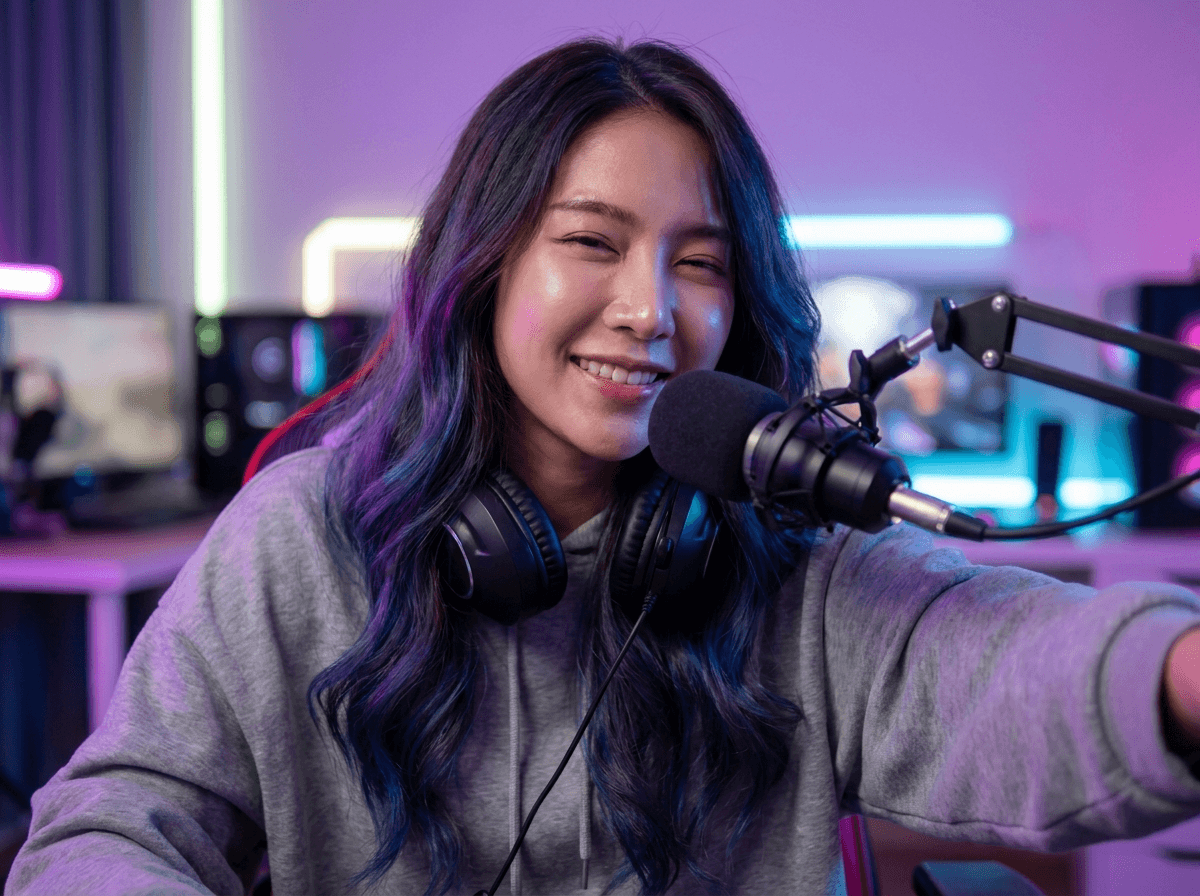
Early AI-generated content was easy to spot: awkward phrasing, distorted images and unnatural voices. That is no longer the case. Modern AI systems can generate photorealistic images, human-like voices, cinematic video and nuanced written content that often passes as human-made. Advances in deep learning architectures, multimodal models and vast training datasets have dramatically improved coherence, stylistic control and contextual understanding.
Today’s systems can mimic artistic styles, replicate speech patterns and even generate synthetic personalities. In many cases, the difference between human and AI output is no longer obvious without specialised tools. This growing indistinguishability brings both excitement and concern: while it unlocks creative potential, it also challenges our assumptions about authenticity and authorship.

What AI-Generated Content Is Being Used For
AI UGC is already embedded across a wide range of industries:
Marketing and Advertising: Brands use AI to generate advertising copy, product imagery, social media posts and even personalised campaigns at scale. This enables rapid testing and iteration that would be costly using traditional workflows.
Entertainment and Media: AI is used to create scripts, music, visual effects and even entirely synthetic influencers. Video platforms increasingly feature AI-assisted or fully AI-generated content.
Gaming and Virtual Worlds: Developers use AI to generate environments, dialogue and character behaviour dynamically, making experiences more immersive and scalable.
Education and Training: AI-generated explanations, simulations and visualisations help tailor learning to individual needs.
E-commerce: Product descriptions, reviews and even virtual try-ons are enhanced or generated by AI to improve customer experience.
Everyday Creativity: Individuals use AI tools to design logos, write stories, edit photographs and produce videos without formal training.
In short, AI is not replacing content creation—it is expanding who can participate in it.
Implications for Human Creators
The rise of AI UGC brings both opportunity and tension for human creators.
On one hand, AI can act as a powerful collaborator. It reduces friction, accelerates ideation and allows creators to focus on higher-level storytelling and strategy. Tasks that once took hours—drafting, editing and formatting—can now be completed in minutes. This democratises creativity, giving more people the ability to produce polished work.
On the other hand, it introduces genuine challenges:
Economic Pressure: As AI lowers production costs, the market may become saturated with content, potentially reducing the value of individual creative work.
Authenticity and Trust: If audiences cannot distinguish between human and AI-generated content, trust becomes more fragile. Questions around disclosure and transparency are increasingly important.
Ownership and Attribution: AI systems are trained on vast amounts of existing content, often without explicit permission. This raises ongoing debates about intellectual property and fair compensation.
Creative Identity: For many artists and creators, the act of creation is deeply personal. The idea that a machine can replicate or approximate that process can feel unsettling or even threatening.
A Collaborative Future
Rather than a simple narrative of replacement, the future of AI UGC is likely to be hybrid. The most compelling work may come from humans who know how to direct, refine and collaborate effectively with AI systems. Creativity may shift from pure creation towards curation, guidance and synthesis.
At the same time, society will need to establish norms around disclosure, ethics and fair use. The tools are evolving faster than the frameworks that govern them, making this a critical moment for thoughtful discussion.
Conclusion
AI-generated content represents one of the most significant shifts in the creative landscape in decades. Its ability to produce realistic, scalable and diverse content is reshaping industries and redefining what it means to create. For human creators, the challenge is not simply to compete with AI, but to adapt alongside it—leveraging its strengths while preserving the uniquely human elements of creativity: intention, emotion and meaning.

More Projects
Social Media and Marketing
UGC CREATORS
The Rise of AI-User Generated Content
Time :
2006
The Rise of AI-Generated Content: Innovation, Use Cases, and Implications for Human Creativity
Artificial intelligence has shifted from a behind-the-scenes tool to a front-and-centre creative force. One of the most transformative developments in recent years is AI-generated content (often referred to as AI UGC—user-generated content created with AI assistance). What once required teams of designers, writers and editors can now be produced in seconds by increasingly sophisticated systems. This shift is not only technical—it is cultural, economic and deeply human.
From Rough Outputs to Near-Indistinguishable Creations
Early AI-generated content was easy to spot: awkward phrasing, distorted images and unnatural voices. That is no longer the case. Modern AI systems can generate photorealistic images, human-like voices, cinematic video and nuanced written content that often passes as human-made. Advances in deep learning architectures, multimodal models and vast training datasets have dramatically improved coherence, stylistic control and contextual understanding.
Today’s systems can mimic artistic styles, replicate speech patterns and even generate synthetic personalities. In many cases, the difference between human and AI output is no longer obvious without specialised tools. This growing indistinguishability brings both excitement and concern: while it unlocks creative potential, it also challenges our assumptions about authenticity and authorship.
What AI-Generated Content Is Being Used For
AI UGC is already embedded across a wide range of industries:
Marketing and Advertising: Brands use AI to generate advertising copy, product imagery, social media posts and even personalised campaigns at scale. This enables rapid testing and iteration that would be costly using traditional workflows.
Entertainment and Media: AI is used to create scripts, music, visual effects and even entirely synthetic influencers. Video platforms increasingly feature AI-assisted or fully AI-generated content.
Gaming and Virtual Worlds: Developers use AI to generate environments, dialogue and character behaviour dynamically, making experiences more immersive and scalable.
Education and Training: AI-generated explanations, simulations and visualisations help tailor learning to individual needs.
E-commerce: Product descriptions, reviews and even virtual try-ons are enhanced or generated by AI to improve customer experience.
Everyday Creativity: Individuals use AI tools to design logos, write stories, edit photographs and produce videos without formal training.
In short, AI is not replacing content creation—it is expanding who can participate in it.
Implications for Human Creators
The rise of AI UGC brings both opportunity and tension for human creators.
On one hand, AI can act as a powerful collaborator. It reduces friction, accelerates ideation and allows creators to focus on higher-level storytelling and strategy. Tasks that once took hours—drafting, editing and formatting—can now be completed in minutes. This democratises creativity, giving more people the ability to produce polished work.
On the other hand, it introduces genuine challenges:
Economic Pressure: As AI lowers production costs, the market may become saturated with content, potentially reducing the value of individual creative work.
Authenticity and Trust: If audiences cannot distinguish between human and AI-generated content, trust becomes more fragile. Questions around disclosure and transparency are increasingly important.
Ownership and Attribution: AI systems are trained on vast amounts of existing content, often without explicit permission. This raises ongoing debates about intellectual property and fair compensation.
Creative Identity: For many artists and creators, the act of creation is deeply personal. The idea that a machine can replicate or approximate that process can feel unsettling or even threatening.
A Collaborative Future
Rather than a simple narrative of replacement, the future of AI UGC is likely to be hybrid. The most compelling work may come from humans who know how to direct, refine and collaborate effectively with AI systems. Creativity may shift from pure creation towards curation, guidance and synthesis.
At the same time, society will need to establish norms around disclosure, ethics and fair use. The tools are evolving faster than the frameworks that govern them, making this a critical moment for thoughtful discussion.
Conclusion
AI-generated content represents one of the most significant shifts in the creative landscape in decades. Its ability to produce realistic, scalable and diverse content is reshaping industries and redefining what it means to create. For human creators, the challenge is not simply to compete with AI, but to adapt alongside it—leveraging its strengths while preserving the uniquely human elements of creativity: intention, emotion and meaning.
More Projects
Social Media and Marketing
UGC CREATORS
The Rise of AI-User Generated Content
Time :
2006
The Rise of AI-Generated Content: Innovation, Use Cases, and Implications for Human Creativity
Artificial intelligence has shifted from a behind-the-scenes tool to a front-and-centre creative force. One of the most transformative developments in recent years is AI-generated content (often referred to as AI UGC—user-generated content created with AI assistance). What once required teams of designers, writers and editors can now be produced in seconds by increasingly sophisticated systems. This shift is not only technical—it is cultural, economic and deeply human.
From Rough Outputs to Near-Indistinguishable Creations
Early AI-generated content was easy to spot: awkward phrasing, distorted images and unnatural voices. That is no longer the case. Modern AI systems can generate photorealistic images, human-like voices, cinematic video and nuanced written content that often passes as human-made. Advances in deep learning architectures, multimodal models and vast training datasets have dramatically improved coherence, stylistic control and contextual understanding.
Today’s systems can mimic artistic styles, replicate speech patterns and even generate synthetic personalities. In many cases, the difference between human and AI output is no longer obvious without specialised tools. This growing indistinguishability brings both excitement and concern: while it unlocks creative potential, it also challenges our assumptions about authenticity and authorship.
What AI-Generated Content Is Being Used For
AI UGC is already embedded across a wide range of industries:
Marketing and Advertising: Brands use AI to generate advertising copy, product imagery, social media posts and even personalised campaigns at scale. This enables rapid testing and iteration that would be costly using traditional workflows.
Entertainment and Media: AI is used to create scripts, music, visual effects and even entirely synthetic influencers. Video platforms increasingly feature AI-assisted or fully AI-generated content.
Gaming and Virtual Worlds: Developers use AI to generate environments, dialogue and character behaviour dynamically, making experiences more immersive and scalable.
Education and Training: AI-generated explanations, simulations and visualisations help tailor learning to individual needs.
E-commerce: Product descriptions, reviews and even virtual try-ons are enhanced or generated by AI to improve customer experience.
Everyday Creativity: Individuals use AI tools to design logos, write stories, edit photographs and produce videos without formal training.
In short, AI is not replacing content creation—it is expanding who can participate in it.
Implications for Human Creators
The rise of AI UGC brings both opportunity and tension for human creators.
On one hand, AI can act as a powerful collaborator. It reduces friction, accelerates ideation and allows creators to focus on higher-level storytelling and strategy. Tasks that once took hours—drafting, editing and formatting—can now be completed in minutes. This democratises creativity, giving more people the ability to produce polished work.
On the other hand, it introduces genuine challenges:
Economic Pressure: As AI lowers production costs, the market may become saturated with content, potentially reducing the value of individual creative work.
Authenticity and Trust: If audiences cannot distinguish between human and AI-generated content, trust becomes more fragile. Questions around disclosure and transparency are increasingly important.
Ownership and Attribution: AI systems are trained on vast amounts of existing content, often without explicit permission. This raises ongoing debates about intellectual property and fair compensation.
Creative Identity: For many artists and creators, the act of creation is deeply personal. The idea that a machine can replicate or approximate that process can feel unsettling or even threatening.
A Collaborative Future
Rather than a simple narrative of replacement, the future of AI UGC is likely to be hybrid. The most compelling work may come from humans who know how to direct, refine and collaborate effectively with AI systems. Creativity may shift from pure creation towards curation, guidance and synthesis.
At the same time, society will need to establish norms around disclosure, ethics and fair use. The tools are evolving faster than the frameworks that govern them, making this a critical moment for thoughtful discussion.
Conclusion
AI-generated content represents one of the most significant shifts in the creative landscape in decades. Its ability to produce realistic, scalable and diverse content is reshaping industries and redefining what it means to create. For human creators, the challenge is not simply to compete with AI, but to adapt alongside it—leveraging its strengths while preserving the uniquely human elements of creativity: intention, emotion and meaning.